


Seminar on Shut-Down on Demand Systems
The Portuguese Renewable Energy Association (APREN) brought together dozens of representatives from public entities, developers, consultants, and technology suppliers for a seminar on Shut-Down on Demand (SDOD) systems and their role in preventing bird collisions in wind farms. The initiative, supported by the environmental consultancy BioInsight, took place at Culturgest in Lisbon.
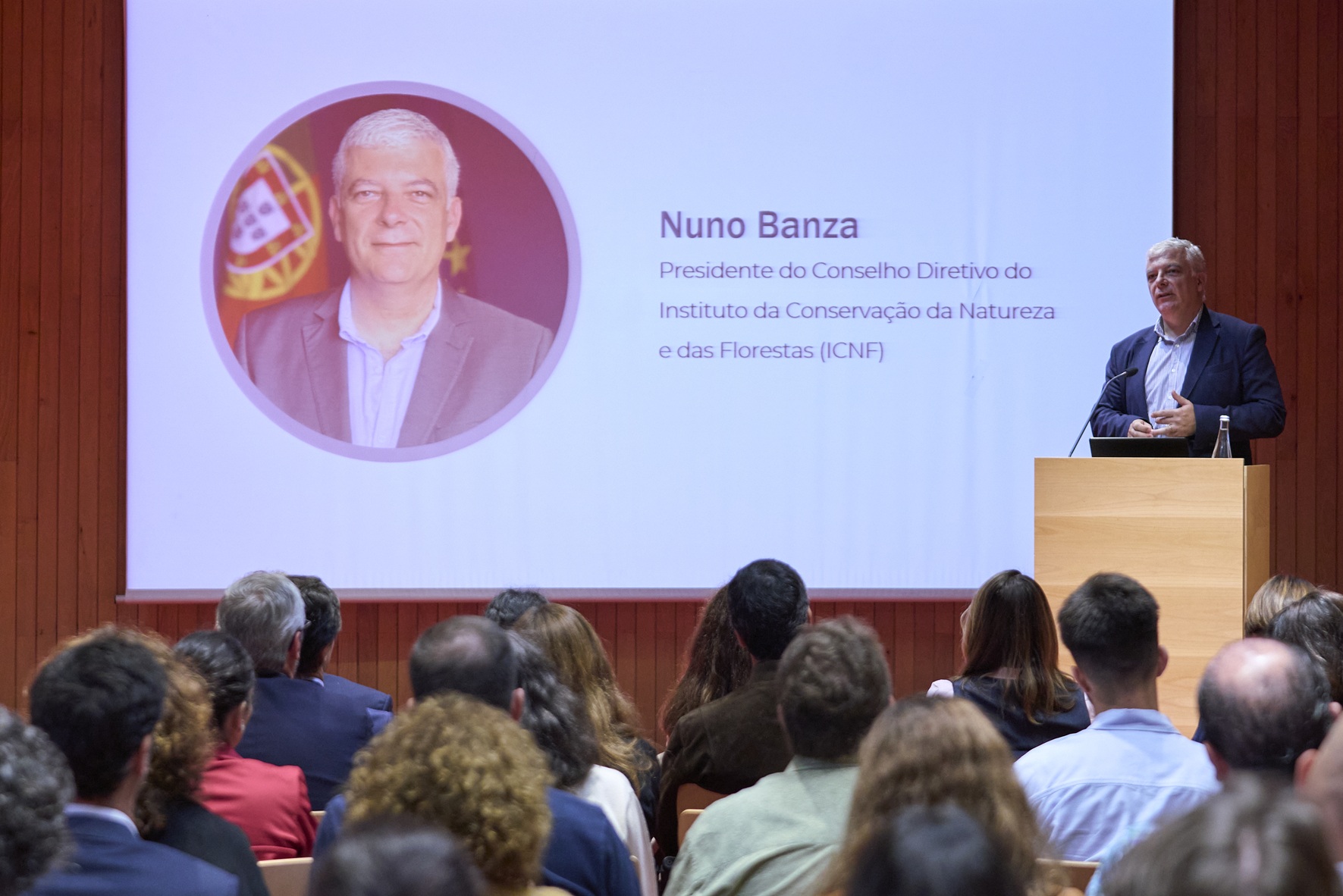
The opening session included the participation of Nuno Banza, President of the Board of Directors of the Institute for Nature Conservation and Forests (ICNF), and Maria do Carmo Figueira, Director of the Environmental Assessment Department of the Portuguese Environment Agency (APA), who congratulated the initiative.
Nuno Banza highlighted the importance of consensus among all parties and the pursuit of the best possible scenario, emphasizing the importance of past, present, and future technological developments in addressing the various challenges facing the sector.
Maria do Carmo Figueira emphasized that all actors involved share the same objectives, which were established at the European level through the National Energy and Climate Plan 2030. She stressed that continuous dialogue and collaboration among all parties is essential to achieving the energy transition, reconciling renewable projects and natural values with technological development.
Technological innovation, scientific knowledge, and practical experience are essential tools for realizing this ambition, alongside dialogue and cooperation among all: promoters, consultants, authorities, and public institutions.
Shut-Down on Demand (SDOD) systems are effective tools for mitigating the risk of bird collisions with wind turbines, preventing mortality and increasing the compatibility between renewable energy production and nature conservation. These systems use optical technology and artificial intelligence to detect birds in real time and order the automatic and temporary shutdown of the turbines, demonstrating that technological innovation can be a decisive ally in protecting biodiversity.
Throughout the meeting, entities such as Galp, WeLink, Zefiro Partners, and Bioseco shared practical experiences and case studies, reinforcing the role of technology and artificial intelligence in reducing the risk of poultry mortality and optimizing energy production.
The initiative also included a participatory workshop among stakeholders in the sector, where technical and institutional challenges were discussed and priorities were identified for integrating SDODs into broader strategies for mitigation and net biodiversity gains.
The presentations given at the event are available below.